



A little late this week as I’m again involved in some final (final!) editing of my work on Rowena Cade and The Minack Theatre. So this poem seems very appropriate, both as a follow up to last week’s poem about gannets, and as a complement to the granite cliffs of Cornwall. I’d not read Independence Song for a while and was struck by an echo of something I found in Marina Warner’s latest book Sanctuary (Kindle Edition p.28).
Rock is a natural symbol, in Mary Douglas’s terms, expressing human relation to time and space, to origins and, it is imagined, to ultimate destiny, and sanctuaries are confirmed by its presence, sometimes unadorned but sometimes hewn into stone altars in which a precious relic is embedded or beneath which a saint’s body or body parts lie buried. Pilgrim ways, often staked out by stone landmarks from one shrine to another, retrace a journey in the past and unfold a distant story as they recreate the geography where the events took place. Relics are portable memories and pilgrim stations a form of mobile storytelling.
There are material reasons for this investment of significance in mere stone: it is durable, it is almost impervious to corruption (unlike living things), it signifies deep time...
Independence Song

And aye and ayre, past Ailsa Craig we soared, the empty ship high on the wave.
In the deserted stern, my heart roared at its leaving, so isolate,
so proud, so explosive in the surface of the sea. Round the deck I ran to see it
from every angle that I could - the white vessel gliding by its mystery, soulless;
the sky indigo, the sea behind the wake of trammelled water, diesel-churned,
ahead the choppy, deep-sea glow of depth unfathomed. From there she rose
as certain as a goddess, solid in majesty, the awe of rock held fast. Why
this excitement? Then its loneliness, its solitary real-ness thrown at me
unexpectedly out from Greenock, on the dead man’s run, me just a boy
with all the hope of generations piled up against me as high as the Craig,
one thousand feet, as high as that; as if she had just sheared up from the water,
torrents fluming from its back, a sea giantess, Elizabeth of the Ocean.
And I thought I would top it, still do, but there it was as sudden as a goose
out of the Clyde’s reach on the Firth’s edge before the Irish Sea, all a glory
of risen rock, fluted columns from one angle, a bun the next, and it was sunset.

There were birds feckless in the air. What birds? I couldn’t name them but
they flew for me, all for me, and I was as isolate as the Craig, we knew that,
knew each other; call and response from each to each. Oh yes! Proud I was
of the Ailsa rock, for it was me, rising, and both of us gloried in our solo rapture,
you calling the rapture from me, a sudden partner on a lonely voyage. How can
you love granite?  It has the grain of rebellion in its strata - sanctuary and exile.
I watched it sigh beneath the horizon. I watched it close, want it close even now,
remembered, want that thrill and strange elation, discovery, suspense.
Yet deep within this monkish predilection, the ship, the boy, the English Cliff,
fearful and anxious right at the core, taut and unyielding, the sense of injustice,
the danger, the risk, the imagined stench of nature, the guano and mess: belief.
Who drove the ship?  An unseen crew. Don’t interrupt. We were together all at sea.
The rock and me, Ailsa Criag and I, the fairy isle and me; the rock of the sea,
and the isle of a boy, we were one in our isolate sovereignty. And that’s the fear,
that escape not entanglement, that dream not real life; that boy, that rock, the puffins.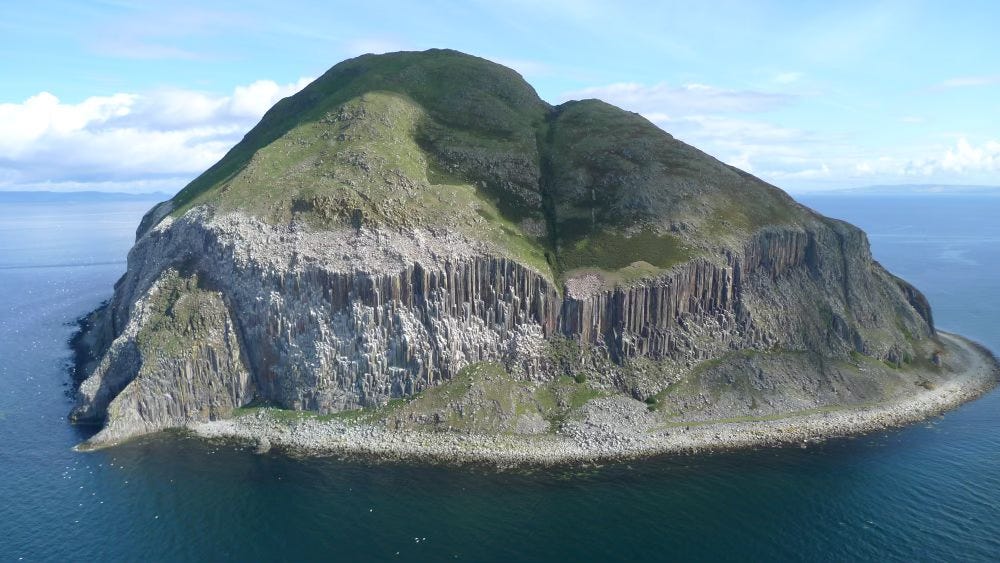
Ailsa for sale
Header picture above and the following text courtesy of Vladi Private Islands.
An iconic island lying in the outer Firth of Clyde, 10 miles off the shore. Home to the world's best known Curling Stone Quarry. Annual rental of £26,000. One attractive cottage and three former cottages.
Ailsa Craig is formed from a volcanic plug from a long extinct volcano believed to be over 500 million years old. It is an archetypal island mountain; a symmetrical cone of primitive rock thrusting from the sea 10 miles west of the south Ayrshire coastline and a symbol great natural grandeur.
It extends to about 2 miles in circumference and rises to an elevation of over 1100 feet above the sea.
Alisa Craig is known particularly for two main assets. Firstly, it is the breeding ground for one of the largest colonies of gannets in the world and secondly it contains a most important 'blue hone' granite quarry, known the world over as the source of granite for curling stones. The lighthouse was built in 1883-6 by Thomas Stevenson.
There is a delightful small cottage at the foot of the cliff on the east side and a ruined castle approximately 60 metres up the path.
Ailsa Craig is for sale for the first time in many generations.
• 2 bedrooms
• Fishing
• Waterside
• Freehold
Ailsa Craig lies approximately 10 miles off the Ayrshire Coast. Known as "Paddy's milestone" it sits approximately half way between Glasgow and Belfast. To get to Ailsa Craig it is possible to hire a private boat from Girvan or land a helicopter.
The only island to win a gold medal in the Olympic Games!
The last time I saw Ailsa
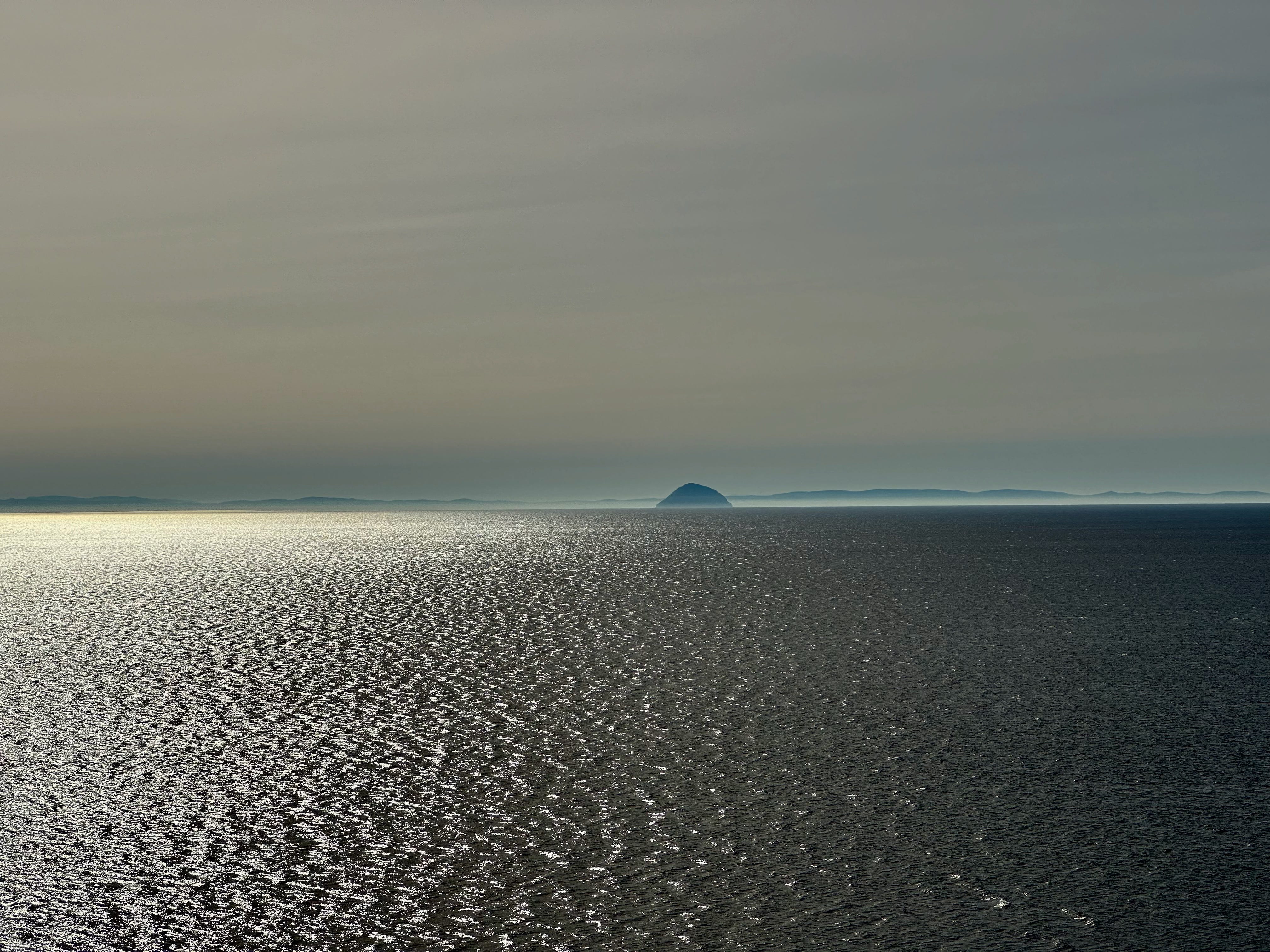
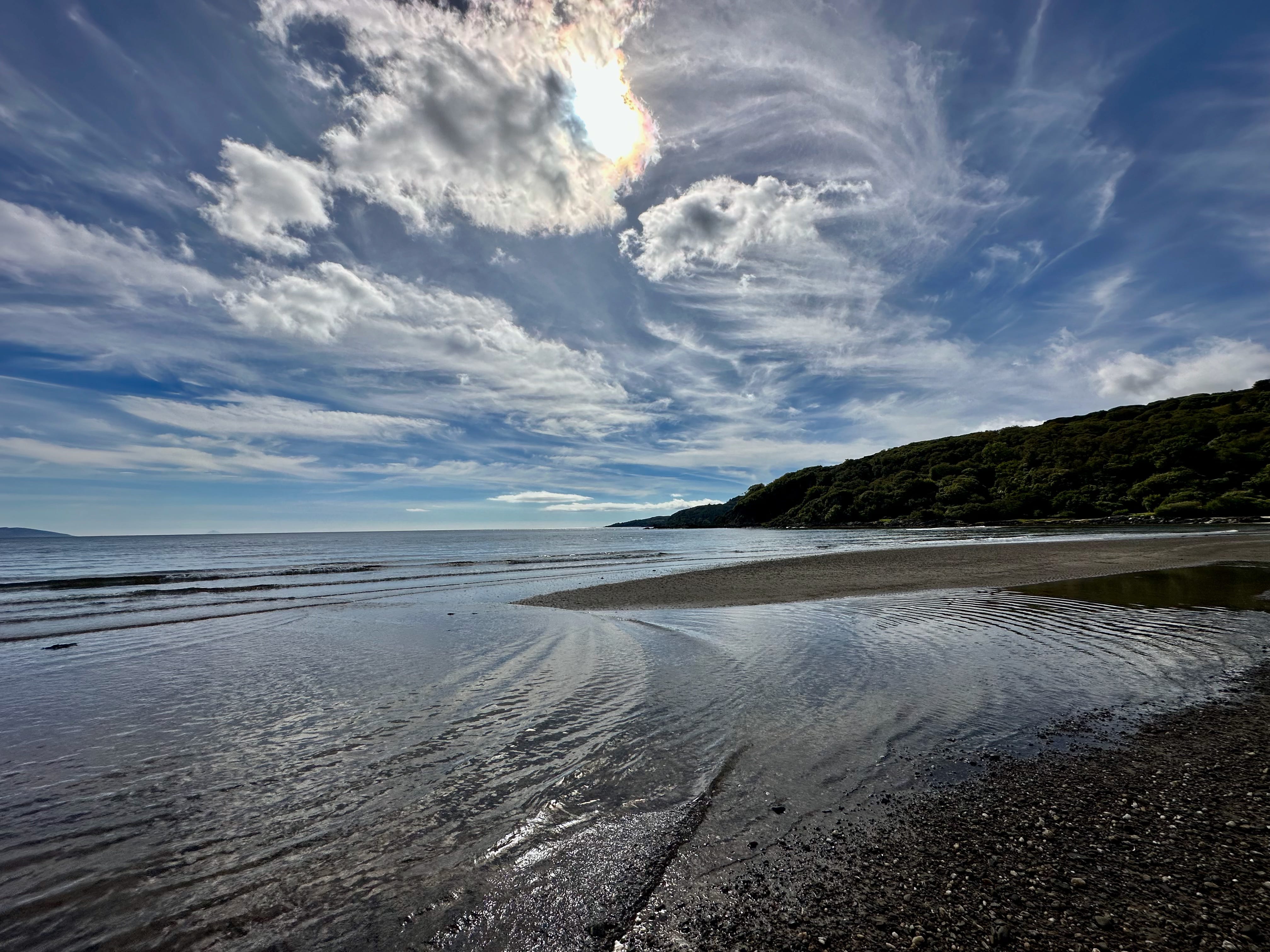
The last time I saw Ailsa Craig was in the distance from the B482 near Campbeltown. I felt as if I was seeing an old friend again, albeit in the distance. But I could feel its amazing pull even so. We were visiting friends in Carradale. Ailsa Craig was also visible from Saddell beach there.
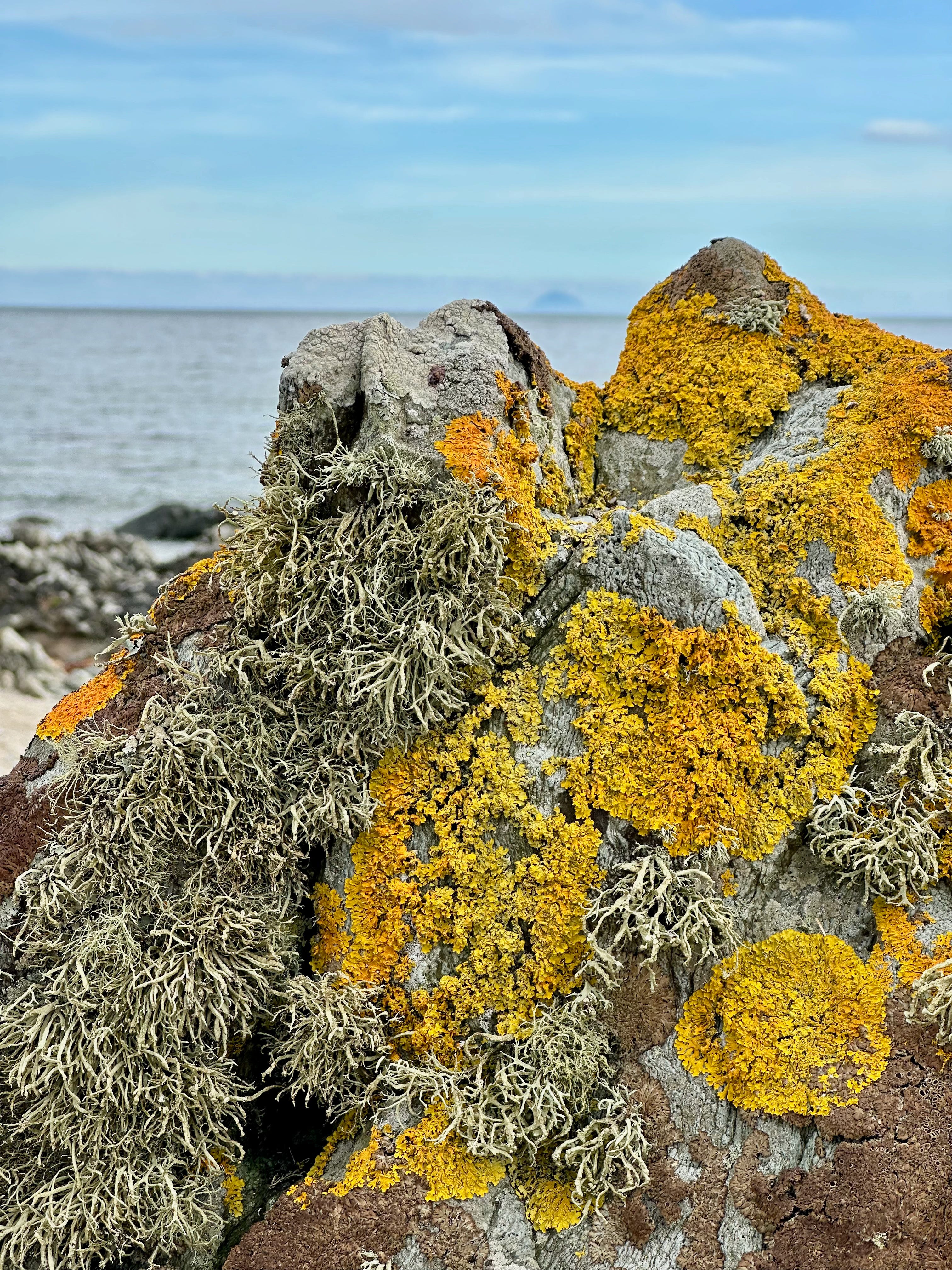
There a picture in Campbeltown museum and art gallery of a brig named Princess Elizabeth off Ailsa Craig.
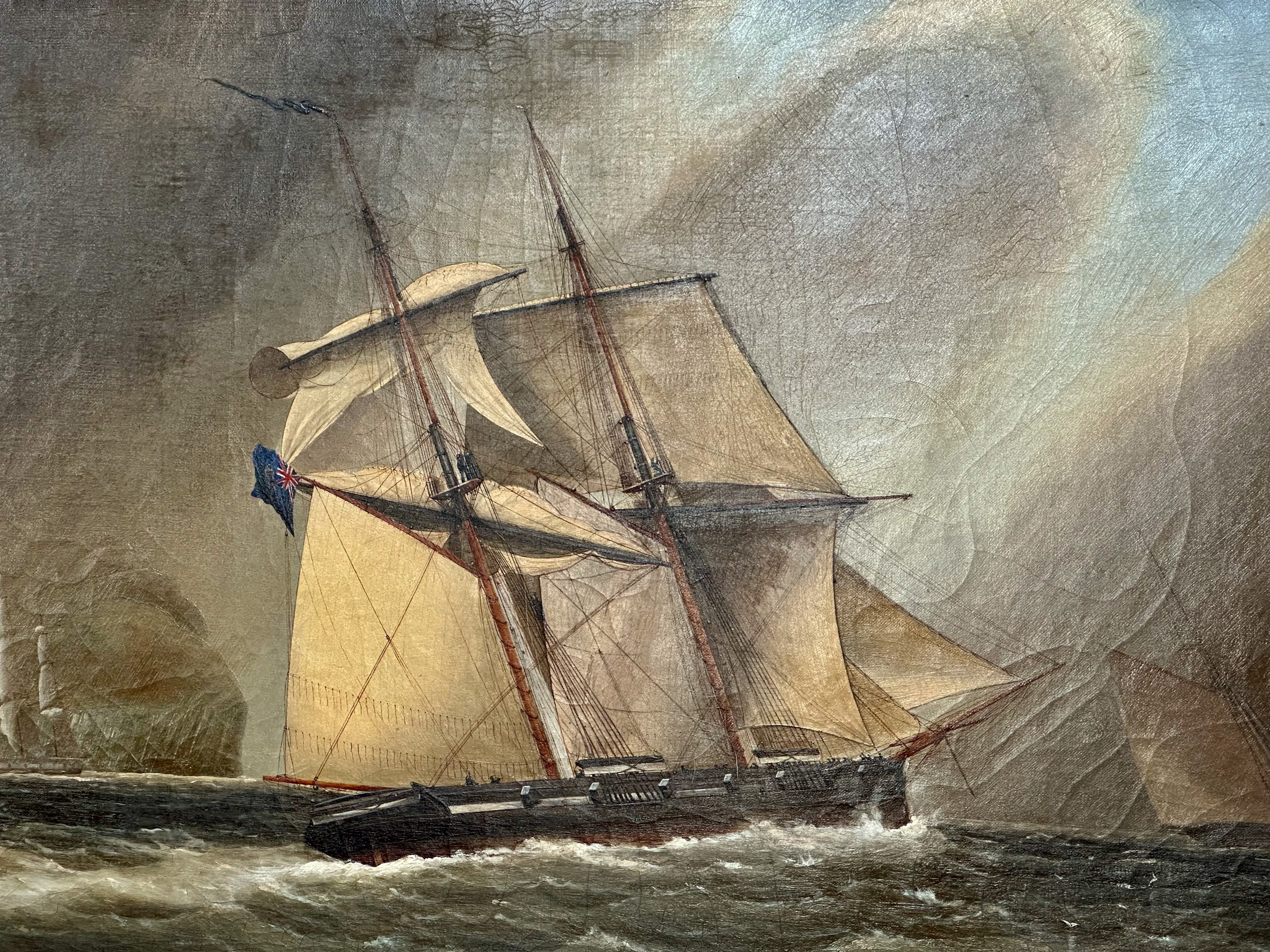
Circle of William Clark
The Brig Princess Elizabeth off Ailsa Craig, Firth of Clyde
1796
Oil on canvas
A brig is a sailing vessel with two square-rigged masts. Eighteen years after this copy was painted by a mystery artist with the initials C.K.M. - the Brig herself was captured.
Britain was at war with America and the Harpy, an American privateer out of Baltimore, seized the Brig Princess Elizabeth.
"8 guns (two long brass 9 s & 9 s 12 lb gunnades) and 38 men, taken after a warm defence, in which she had some killed and wounded, and was much cut up. She had on board a Turkish ambassador for England, an aid to a British general and the 2d officer of a 74.
She was ransomed for $2000, after taking from her the specie and her two brass, and two other guns (the rest being thrown overboard) five pipes of wine &c. The privateer had one man killed" ~ the American prizes monthly list in the Niles Weekly Register
September 10, 1814
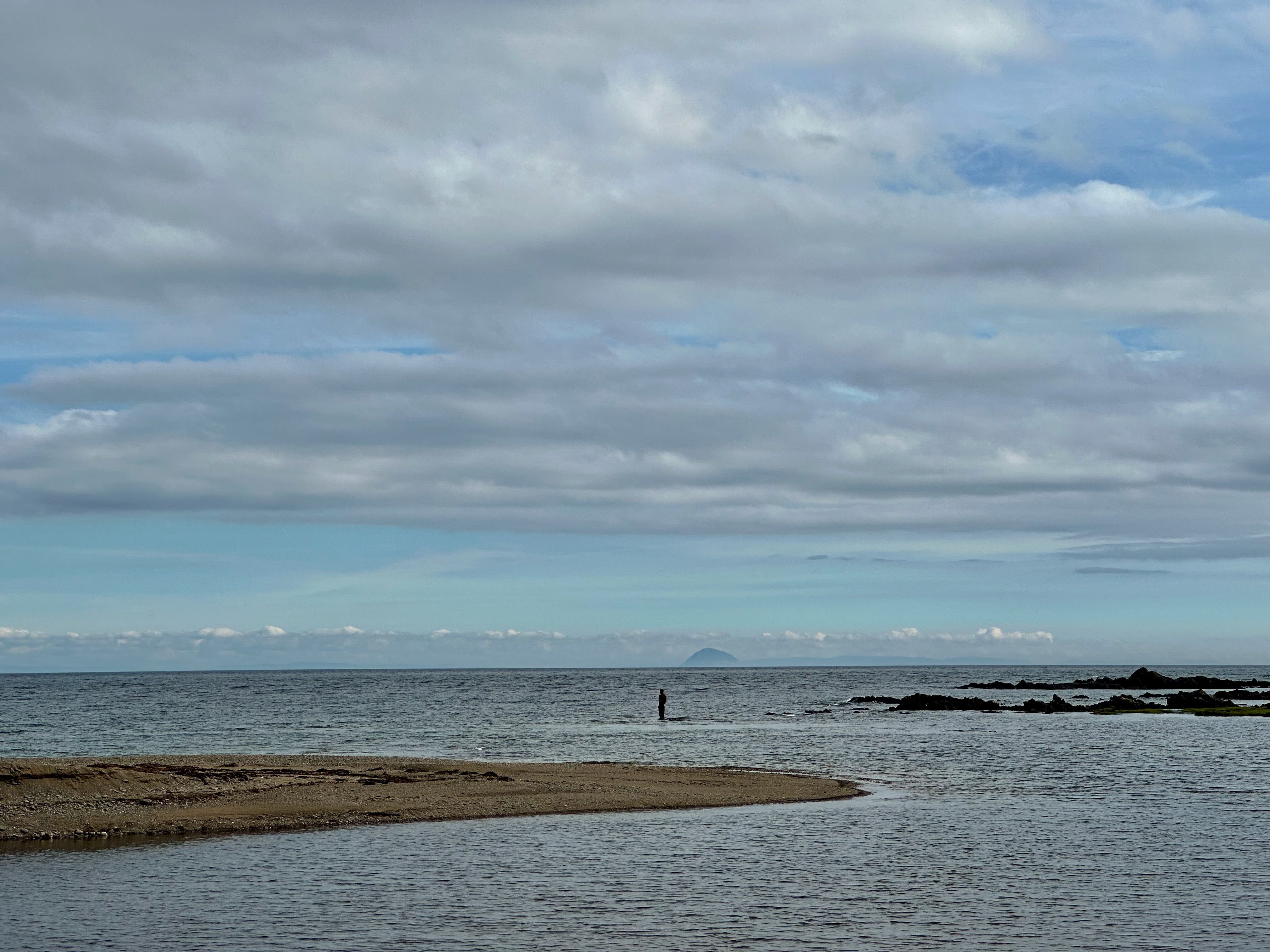
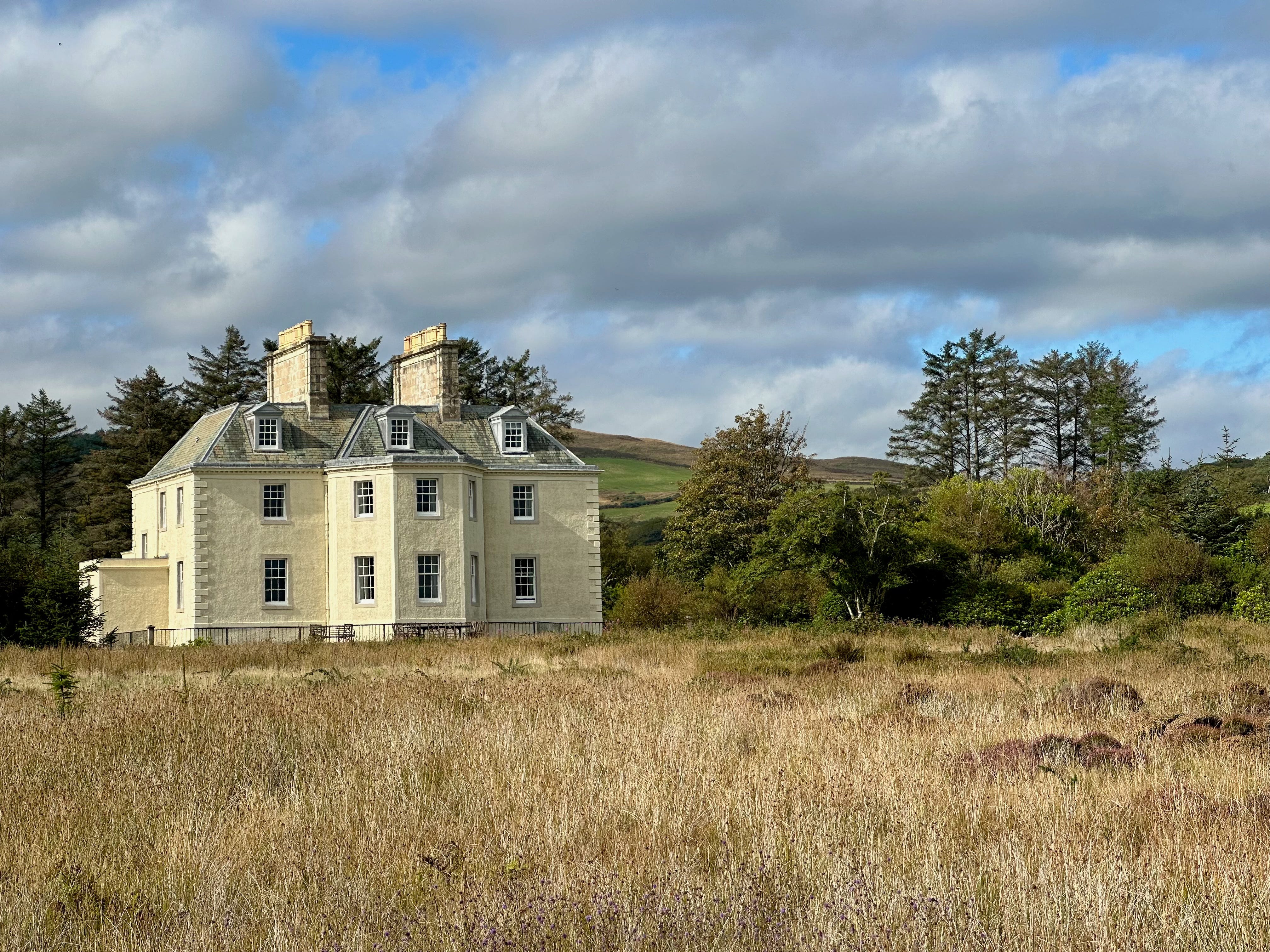
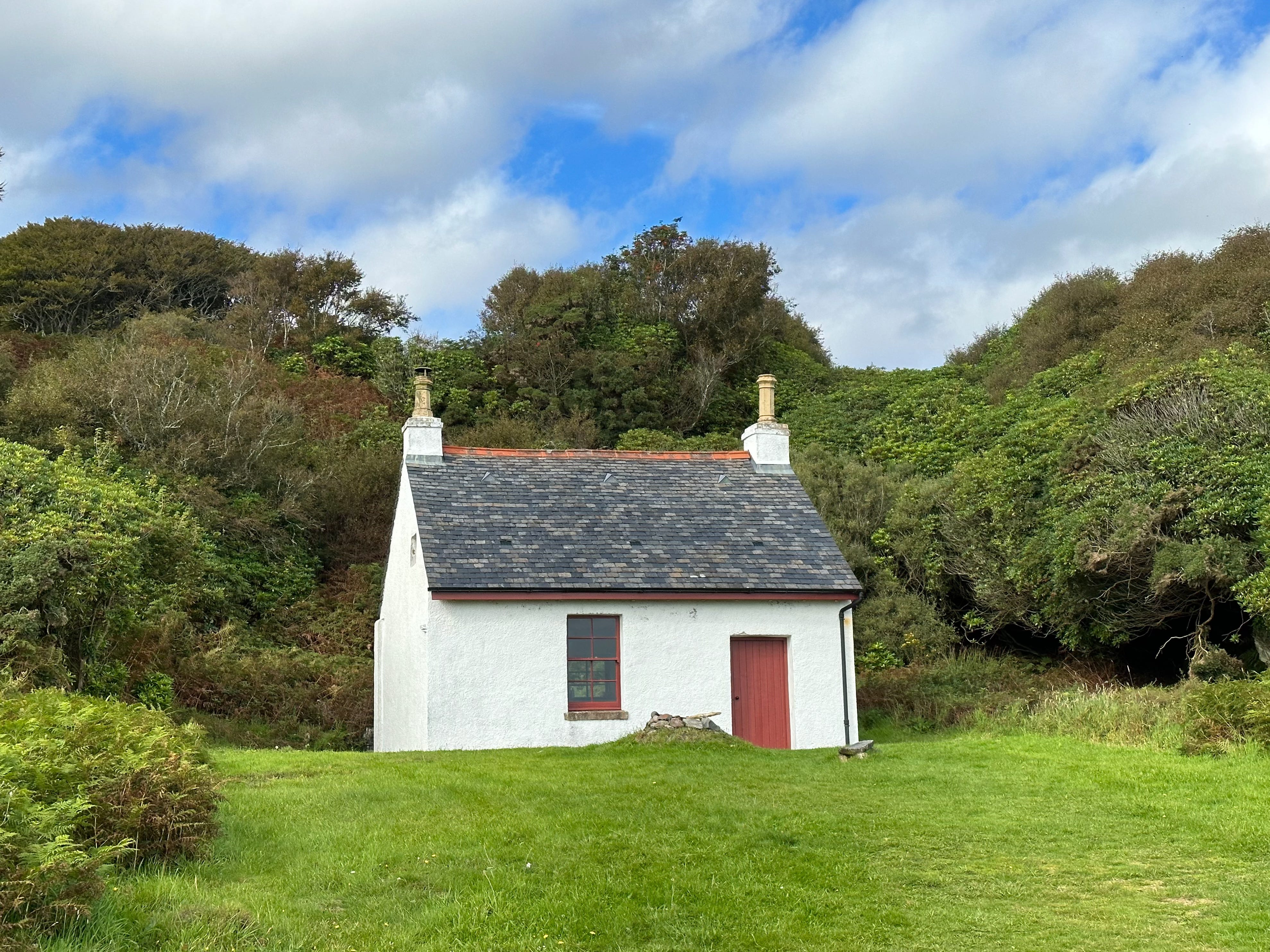
The cottage on Sadell Beach where Paul McCartney filmed the video for Mull of Kintyre. There’s a rather fine distillery on the estate too.


