


Monday January 24th 2000
Susan Cooper author of The Dark is Rising, King of the Shadows:
Writing is a closed room without a handle. Just occasionally the door opens and you can get in. Writing four books like that was like writing a symphony. It had a very clear shape. For me, it was reliving a past I couldn’t get back to. I wrote continuously. I wrote as soon as the children went to school and stopped when they came home. The books were in my head all the time. They protected me from reality.
Quoted by Julia Eccleshare Guardian Review 22.1.00
Remembering the seminar at Swan Hunter Shipbuilders, when Lou Chirillo talked about W.E. Deming’s ideas.
Shipbuilders adopting this new religion… Now these ideas have permeated through car makers, financial institutions, hospitals, schools, and I have spent most of my life helping to spread the message.
In tandem with therapy, change to feminine, teamworking, sport not army, encouragement, overcoming fear, Thatcher, New Labour, consumerism, travel, IT, internet.
To write a story about, around, this process.
Friday January 24th 2003
Art is not autobiography – it’s much more important than that.
Advice to young composers – write the music you want to hear. Express yourself.
Witold Lutoslawski (1913-94)
Christine tells me how she went on a navigation weekend about mapping and she was the only woman and all the men wanted to stay under cover of the trees and she kept saying no, come out, I want to go and lie in the sun in the field, but all the men wanted to stay in the shade, watching, observing.
Is it something about hunting she wondered? Something about men and hiding, being camouflaged?
And voyeurism? I think.
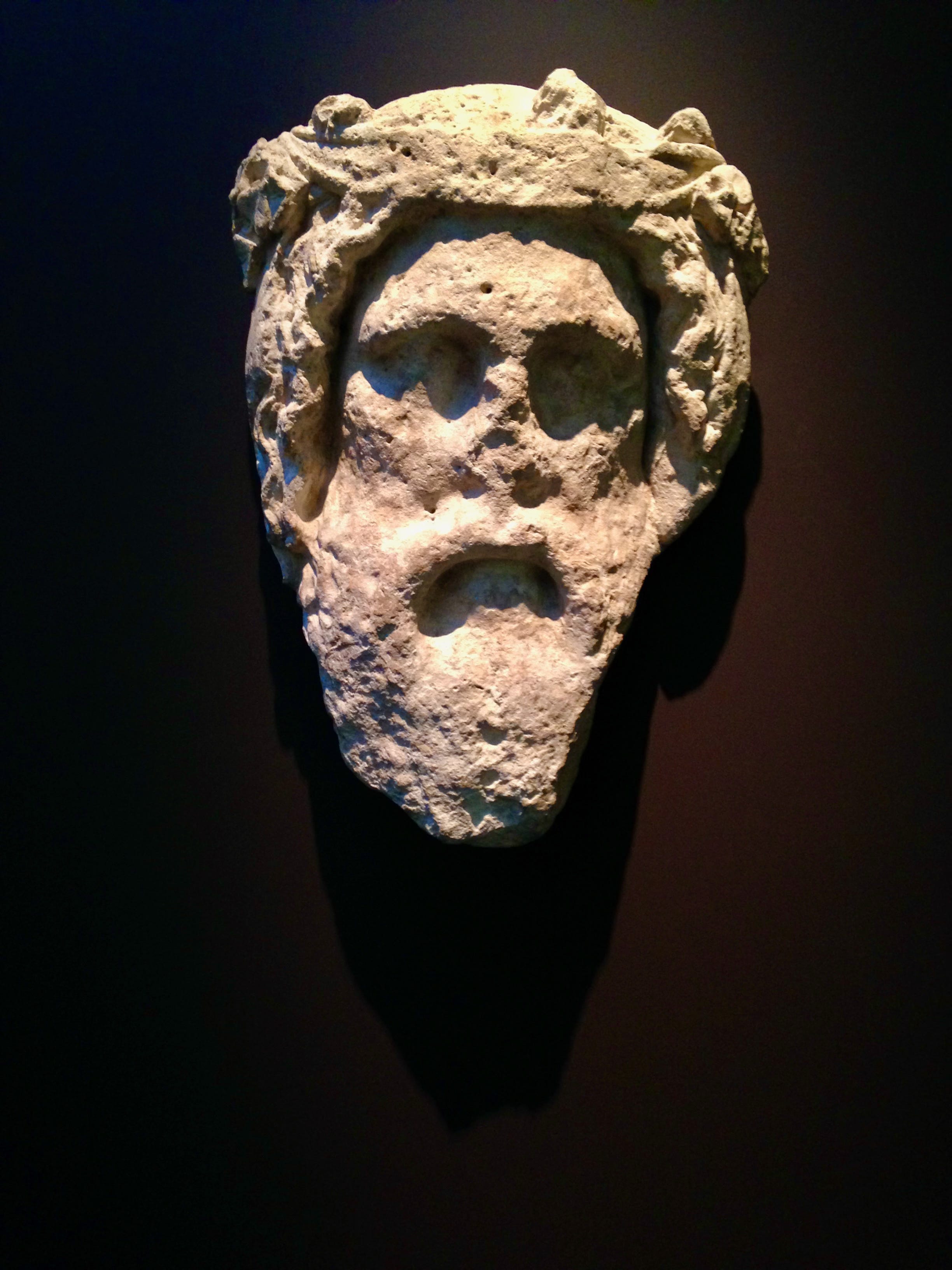
God of nature and pleasure, 100 BC-AD 100
Dionysos was the patron of vegetation, winemaking and the theatre. His cult symbolised religious ecstasy, freedom from care and rebirth. He was believed to have a large entourage of countryside spirits such as maenads, satyrs and nymphs. Masks such as this colossal limestone example were sometimes hung from trees or on pillars, and draped in real clothes and vegetation as offerings.
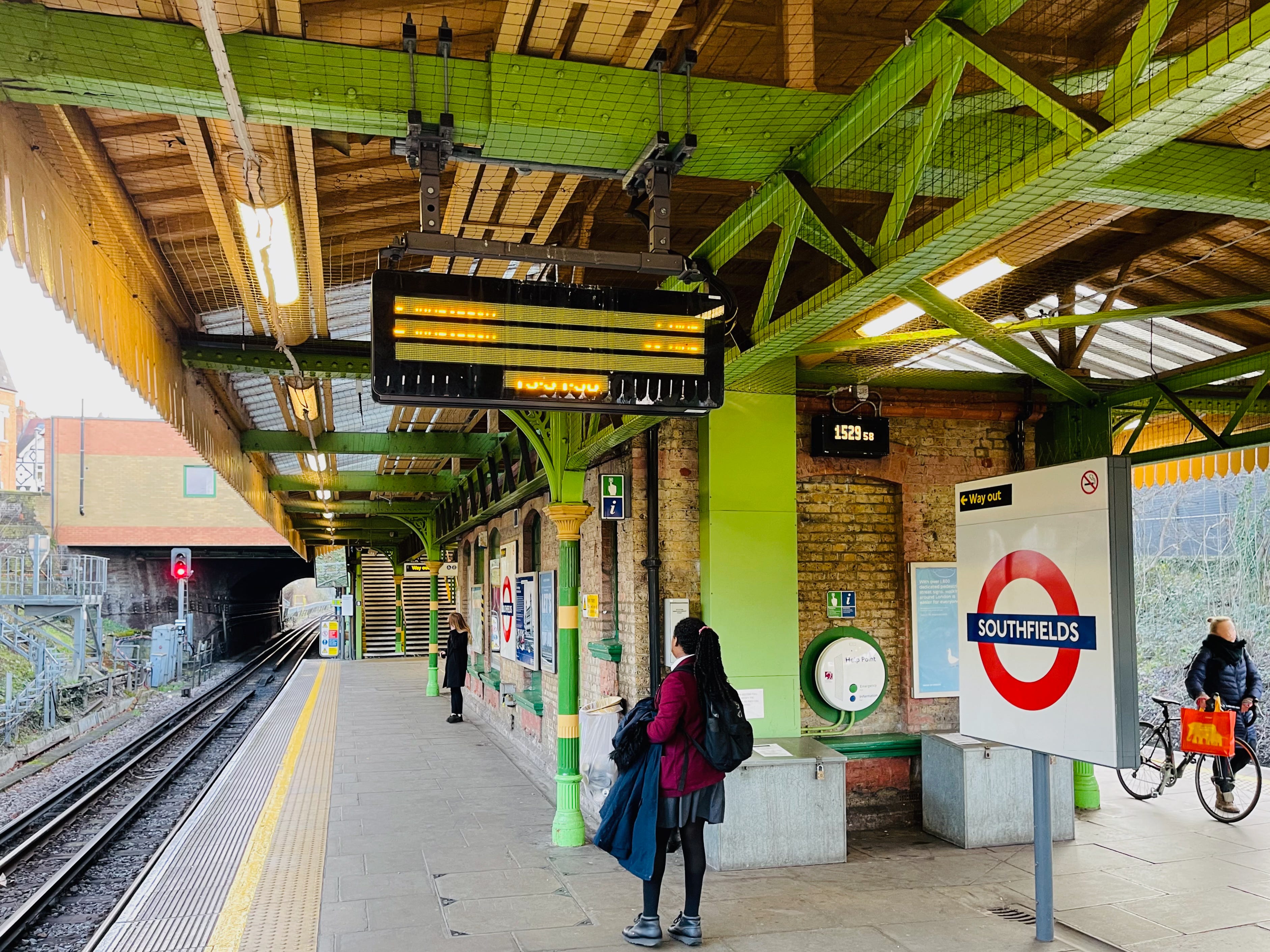
The flatness of the platform shouldn’t surprise one, and it doesn’t. It is after all a platform, long and flat, a nondescript colour, perhaps eau de nil or the anonymous grey of paving slabs. It sits there at the base, as the base of our consciousness. Black metal bench seats with yellow armrests at each end are spaced along it’s centre. They face both tracks. A gentle flow of people leave the west bound train and head towards the exit, along the platform, under the green station awning, up the two flights of metal-edged concrete stairs and out of the main entrance, a Victorian gatehouse of stale yellow brick with a red brick portico topped by a wide blue sign telling all and sundry the station name in thick white letters. Above it a tiled pyramid roof with pale greeny-gold lichen along each angle rises to a ball-headed concrete finial at the apex. Sleepy blue black pigeons nestle beneath it. On one side, a tall chimney stack with a rectangular red brick top stares blankly at the afternoon. The most surprising thing about this station apart from its incongruous name is the green of the wooden station awning and it’s supporting cast iron girders and beams. It’s a green no longer recognised in catalogues or paint pots. It’s a green from another age that is now hard to match as the column bases painted lime green indicate. It’s a green from forgotten designs and lost specifications. It’s a green that could say Southern Railway of long-ago, but doesn’t. It’s a green that no one remembers yet here it is in your face day, in day out, whether west-bound or east. It’s a green in the process of becoming another colour that no one can predict. It’s the colour of the unexpected and unexplained, the hue of Covid and avian flu, the tint of decimation and denial, the colour of the new platform of threat that is slowly, inevitably, extending itself into the lives of all the passengers waiting there beneath the surveillance cameras with the bird repellent spikes and the hanging baskets full of mouldy compost and the sticks of dead plants.