

March 3rd
Different years, same date. Sometimes with an additional undated note from the archive.


Sunday March 3rd 1974
My grandfather, my mother’s father, described himself as a ‘Brummagem button’.1
Saturday March 3rd 1990
My father’s grandfather (his mother’s father, my great grandfather, had been a worker in metals too.
His father’s family had been Baptists and walked from High Street Aston to Carrs Lane to worship three times a day.
…………………………………………………………….
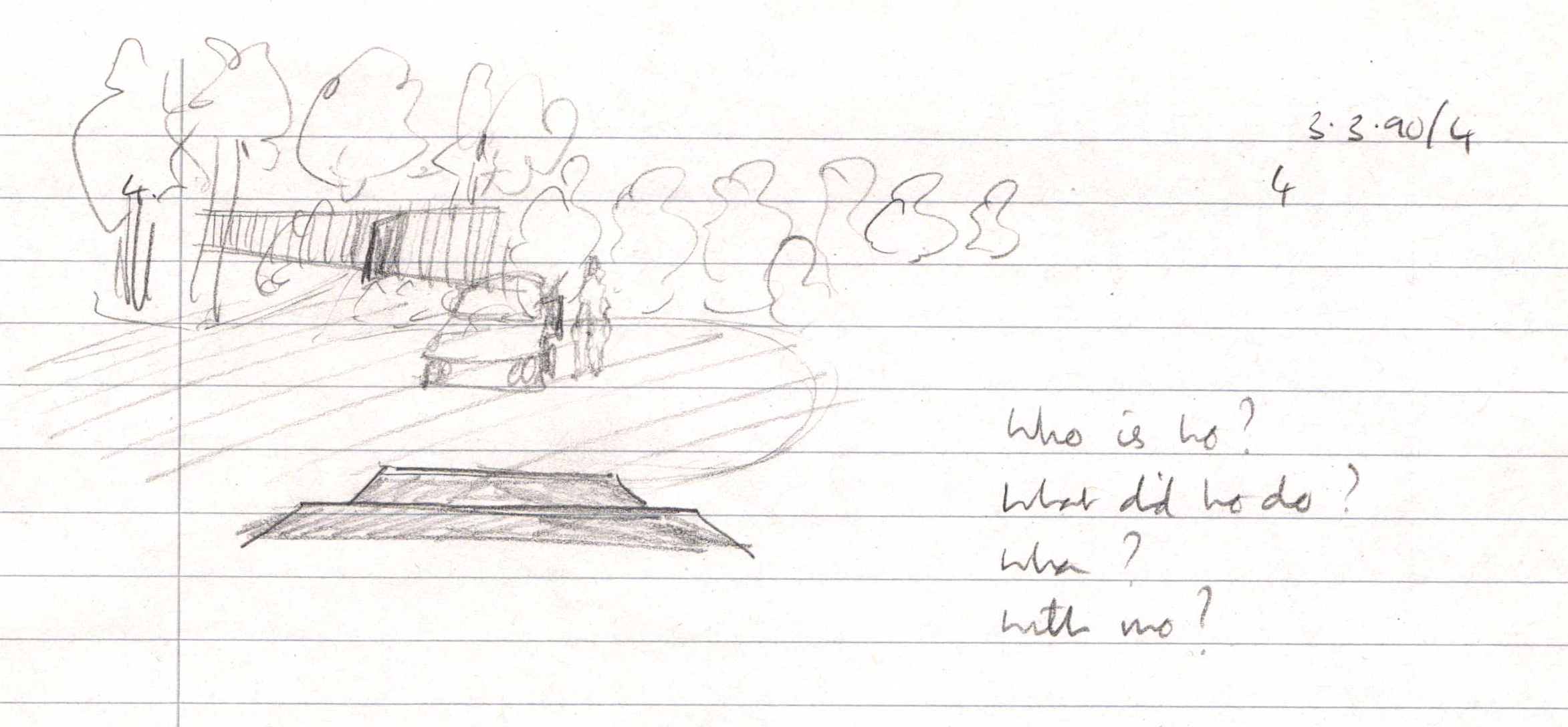
I’m beset by an image of a man in a car parked up in a parking space near the small library where my mother used to take me when a young boy. It’s dark. I’m hidden by the dark leaves of rhododendrons watching the man beside the palings near the path to the library.
Words of places from my childhood:
Elmwood
Endwood
Limberlost
Engelstede
Cherry Orchard
World’s End


An undated note from 1974:
The youngest boy in the family couldn’t or wouldn’t speak from the earliest age and he remained silent every day. Days, weeks, months, years went by and still he said nothing.
Suddenly, one meal time, he said, ‘Food’s bad.’ Initially suprised, shocked even, the family were delighted that the youngest had started to say something.
His mother gently probed his reason for not speaking. ‘Why have you not spoken before?’ she asked.
‘Food’s not been bad before,’ he replied.


My grandfather was a Goode from a family who had been silversmiths in Birmingham at least from the 18th century - although the last of that branch of the family to work in metals. My mother told me that a Brummagem Button had to be born in an area around Hockley Brook. You can find out more about Birmingham and its button makers here.
‘James Turner made his wealth from button making. Indeed Birmingham was so associated with this trade that the townsfolk were often called Brummagem Buttons. This bond owed much to the inventive and highly successful John Taylor, the “Brummagem button king”.
He developed the gilding of buttons with a thin layer of gold leaf or silver plate, whilst he also introduced the sub-division of labour.
A family letter of the Lloyd family described a visit to John Taylor’s button manufactory on July 3, 1755.
It reads that he was: “the most considerable Maker of Gilt-metal Buttons, and enamell’d Snuff- boxes”.
“We were assured that he employs 500 Persons in those two Branches, and when we had seen his Work-shop, we had no Scruple in believing it. The Multitude of Hands each Button goes thro’ before it is sent to the Market, is likewise surprising; you perhaps will think it incredible, when I tell you they go thro’ 70 different Operations of 70 different Work-folks…”
Instead of one skilled man making a few buttons daily, hundreds could be manufactured if they passed through 15 to 20 pairs or more of nimble, fast and efficient hands of semi-skilled and unskilled workers.
Many of these hands belonged to women. Their work and the sub-division of labour was as important for powering Britain into industrial supremacy as were the steam engines of Boulton and Watt that came from the Soho Foundry...
When Taylor died in 1775, it is said that he left the colossal fortune of £200,000. A co-founder of Taylor and Lloyd’s Bank, he also bought land and his sons moved away from manufacturing.’
The Landmarks at Foyes look interesting, John. I so long to step foot back to that side of the pond. Were you born and raised there, John? Cheers, -Thalia